
RESOURCES / PRACTICAL GUIDES
A better brief.
Better print.
Clear guidance on packaging structure, artwork preparation and print process. Start with what you know; we can agree the details for your project.
CHOOSE A TOPIC
What are you planning?
GUIDE 01 / BOARD
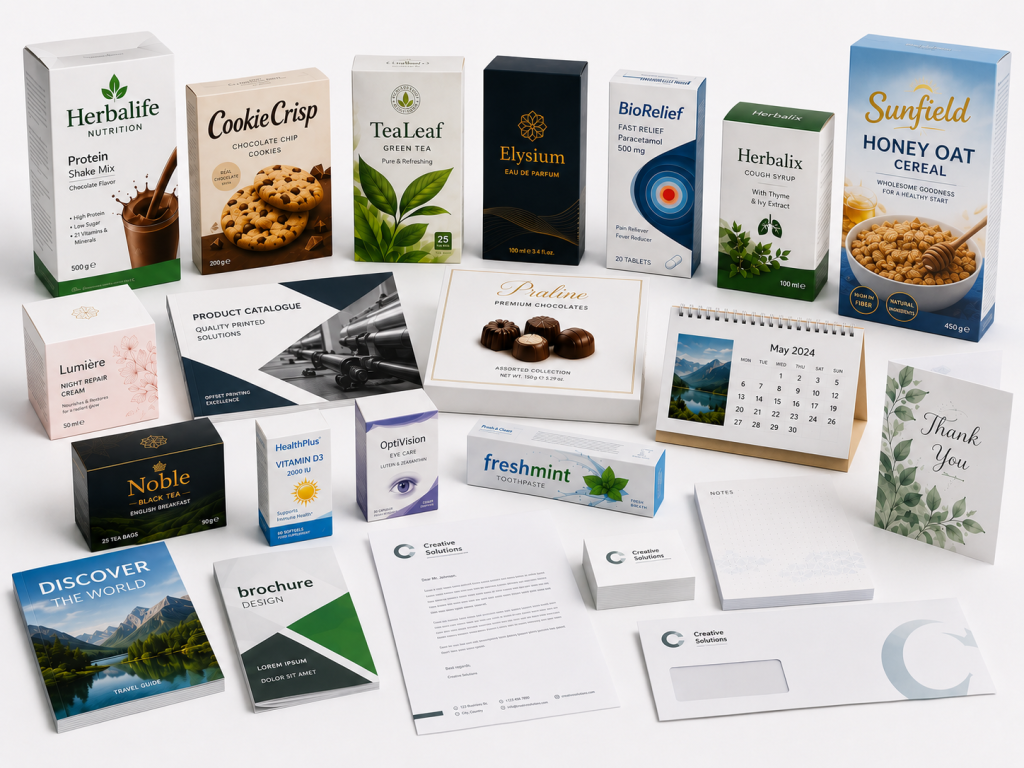
Planning a folding carton
Start with the product and its use before choosing the finish.
Consider how the product enters the pack, how it closes and how it will sit on a shelf. Tuck end, reinforced base, sleeve and tray structures serve different purposes.
For the first discussion, dimensions, product weight or a sample, a photo of the preferred style and an approximate quantity are enough. Structure, board, artwork and finishing can then be checked. The final dieline is made for the specific product.
A useful starting brief
01 Dimensions and a product sample
02 How it will be filled and closed
03 Any window, insert or special finish
GUIDE 02 / ARTWORK
Artwork ready for the print conversation
A few checks before sending the file make the next steps clearer.
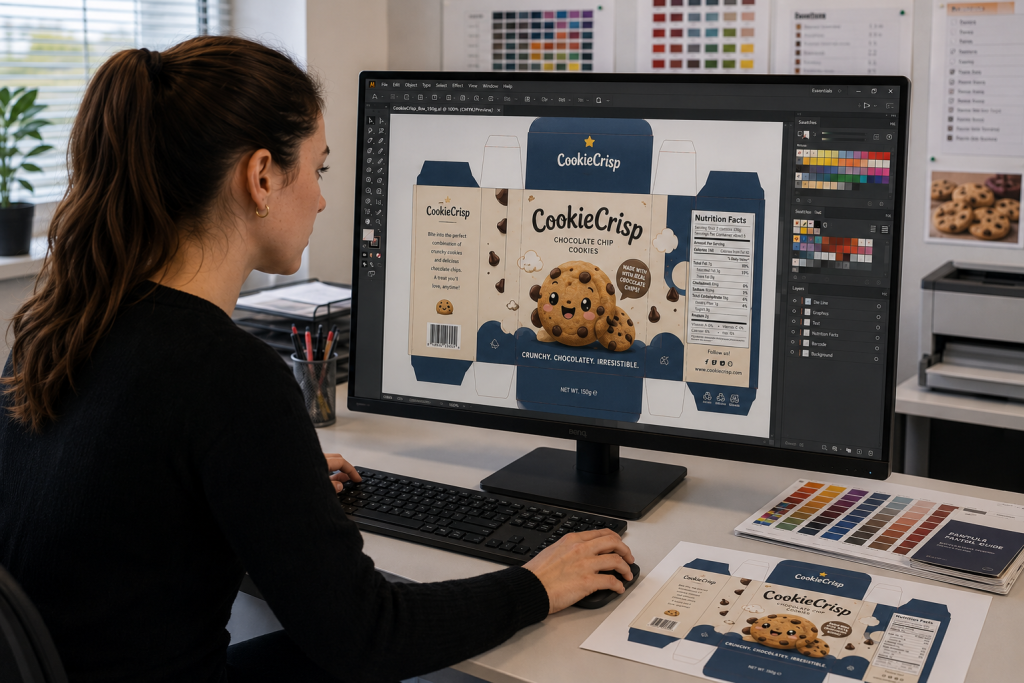
Send the final version in the agreed format, with clear dimensions and fold or binding information. For cartons, place the design on the agreed structure; a sketch is not a final production dieline.
Check that images suit the final size, fonts are embedded or outlined, and spot colours are specified. Use the bleed and trim details from the template agreed for the job. A review or proof can be arranged before production.
Before sending the file
01 Final size, page count or structure
02 Images, fonts and spot colours
03 A clearly named version and a contact for questions
GUIDE 03 / PRINT PROCESS
Digital or offset printing?
The product and its specification decide the route.
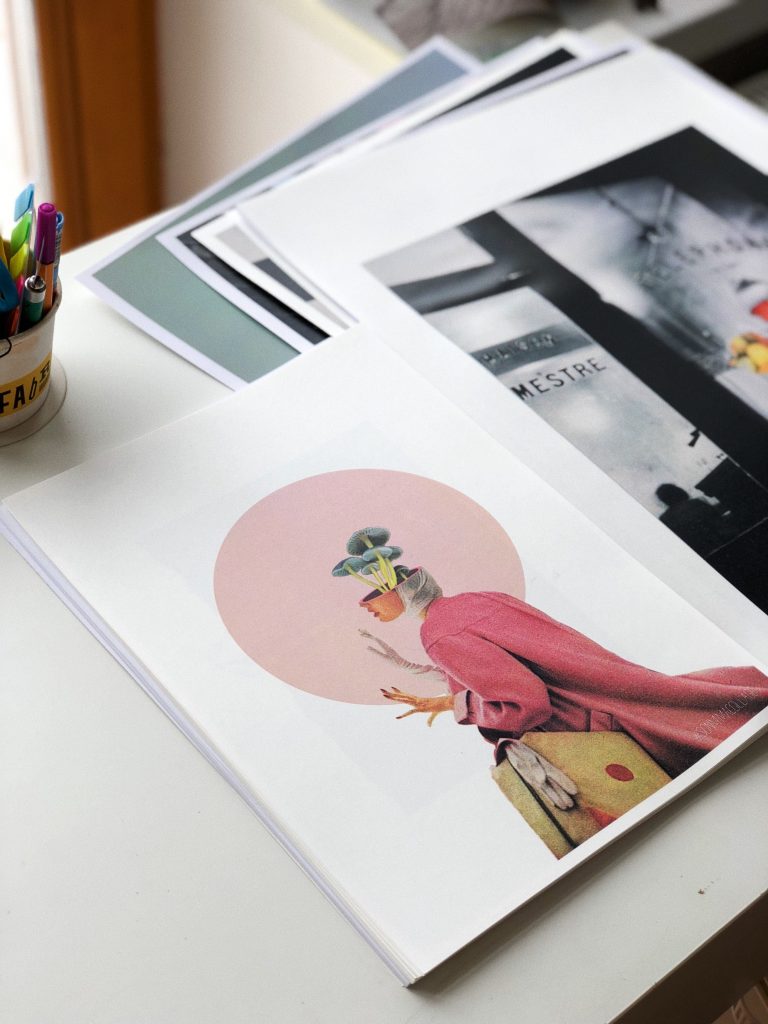
Digital print is useful when a project needs flexibility in quantity, a new version or several editions. Offset suits projects planned as a consistent run on paper or board with connected finishing.
The route cannot be chosen from a photograph alone. Format, paper, colour, page count, finishing and timing belong in the same conversation. An idea may have more than one workable production route.
Send the essentials
01 What you are making and for whom
02 Approximate quantity and number of versions
03 Material, binding and final appearance
GUIDE 04 / FLEXIBLE PACKAGING
Briefing Delpak
The reel must work with the product and packing line.
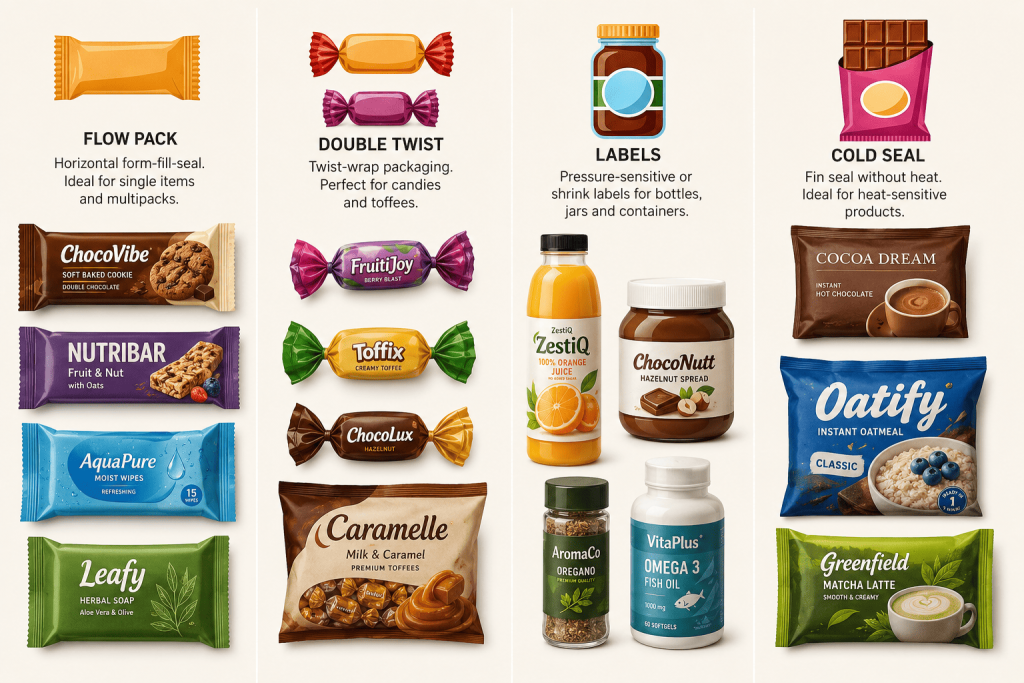
Describe the product, storage conditions and desired pack format. An existing wrapper is useful but not essential. Tell us if the packing line requires a particular seal method, winding direction or surface.
Delpak can consider flexographic or rotogravure print and a suitable film or paper structure. For food contact and other specific uses, material documentation is confirmed as part of the project.
Start with the application
01 Product, storage and end use
02 Pack format, sample and equipment
03 Artwork, colours and material requirements
LET’S TALK
A good project starts with a clear brief.
Describe your product, its purpose and the result you want. We will agree the next steps together.